

Twenty Second Sunday in Ordinary Time [September 2, 2018] Mark 7:1-8, 14-15, 21-23
“You disregard God’s commandment but cling to human tradition.” (Mk. 7:8)
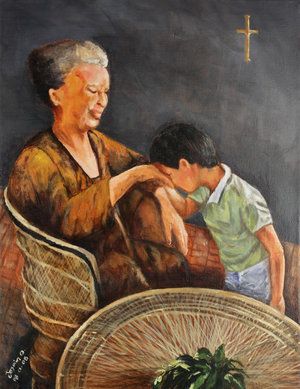 In today’s Gospel, Jesus seems to denounce all traditions. However, this position is rather simplistic and unattainable. The reason is that human beings are the creatures of traditions. Tradition comes from Latin word, “tradere”, meaning “to hand down”. Thus, crudely put, tradition is anything that has been handed down from our predecessors. Traditions range from something tangible like technologies and fashions, to something intangible like values, languages, sciences and many more. I remember how my mother taught me basic Christian prayers, like Our Father, Hail Mary, and the Rosary, and how my father would regularly bring us to the Church every Sunday. This is my family’s religious traditions. As an Indonesian living in the Philippines, I appreciate the “Mano Po” tradition among the Filipinos. This is a simple gesture of respect and blessing. The younger Filipinos are to hold a hand of older Filipino, and place it on their forehead.
Had Jesus renounced all the traditions, He should have stopped speaking Aramaic, refrained from teaching the people, begun removing all His Jewish clothes, and walking naked! Yet, Jesus did not do those things. Jesus respects traditions and acknowledges their importance. However, Jesus also recognizes that there are some traditions that are problematic and bring more problems rather than solutions. Immersed in the stream of traditions, Jesus invites us to discern well on what traditions that bring us true worship of God and genuine progress for human society.
Going back to the time of Jesus, the Jews are particular with ritual purity because they can only worship God when they are ritually clean. In view of this worship, they carefully avoid contamination from blood, dead body and unclean animals, or any objects that are in contact with these things. Since they are not sure whether their hands and utensils are ritually clean, especially if they come from the marketplace or the fields, they make it a habit to purify their hands and utensils to evade contamination from uncleanliness. Thus, various purification rituals develop into traditions for the Jews. The intention of these traditions is good because they assist people to worship God. However, some of the Pharisees put excessive emphasis on these traditions and make them absolute as if failure to observe these rituals means they fail to revere God. They confuse between the genuine worship that brings true honor for God, and other traditional practices that assist people in achieving this worship.
Jesus does not only invite us to discern carefully various traditions we have, but Jesus also offers us a more fundamental tradition in worshiping God. Instead of “handing down” practices or things, Jesus hands down something most important, namely His own life for God and us. Jesus gives up His Body and Blood, His total self, in the Last Supper, and this sacrifice reaches its summit at the Cross. His self-offering becomes the most pleasing worship to God, and procures the gift of salvation for all of us. Because of His Tradition, the world is no longer the same. Jesus hands over this great Tradition to His Disciples and throughout the generations, the Christians are faithfully offering this sacrifice of Jesus Christ in the Eucharist. As we partake Jesus’ self-offering, we are also empowered to hand down ourselves to others. This means we are invited to make our daily sacrifices, to persevere in doing good, and to be faithful to our commitments either as spouse, parents, priests, religious, or professionals. As we live this greatest tradition daily, we do not only make the world a better place, but to offer a pleasing worship to God.
Br. Valentinus Bayuahadi Ruseno, OP
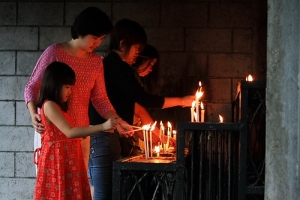 Dalam Injil hari ini, Yesus tampaknya menolak semua tradisi. Namun, pernyataan ini terlalu disederhanakan. Alasannya adalah bahwa manusia adalah makhluk tradisi. Tradisi berasal dari kata Latin, “tradere”, yang berarti “menurunkan”. Jadi, secara sederhana, tradisi adalah segala sesuatu yang telah diturunkan atau diwariskan dari para pendahulu kita. Tradisi berkisar dari sesuatu yang berwujud seperti teknologi, hingga sesuatu yang tidak berwujud seperti bahasa, ilmu pengetahuan, dan banyak lagi. Saya ingat bagaimana ibu saya mengajarkan saya doa-doa dasar, seperti Bapa Kami, Salam Maria, dan Rosario, dan bagaimana ayah saya secara teratur membawa kami ke Gereja setiap Minggu. Ini adalah tradisi agama keluarga saya. Sebagai orang Indonesia yang tinggal di Filipina, saya mengapresiasi tradisi “Pano Po” di antara orang Filipina. Ini adalah sikap menghormati orang yang lebih tua dan juga memberi berkat kepada yang lebih muda. Orang Filipina yang lebih muda akan memegang tangan mereka yang lebih tua, dan meletakkannya di dahi mereka.
 To say “Amen” is something usually we do in prayer. Commonly it is used to end a prayer. Our biblical prayers like Our Father and Hail Mary are usually concluded by amen. In several occasions, amen is mentioned more often. One of my duties as a hospital chaplain is to lead a prayer of healing for the sick. I always ask the family and friends who accompany the patients to pray together. Sometimes, they will say amen at the end of the prayer. However, some others will utter several amens within the prayer, and in fact, some people will say more amens than my prayer! In several occasions, amen is utilized outside the context of prayer. Preachers with a charismatic gift will invite their listeners to say amen. Surely, it is a good technique to keep the listeners awake!
 Mengatakan “Amin” adalah sesuatu yang biasanya kita lakukan dalam doa. Kata ini biasanya digunakan untuk mengakhiri doa. Doa alkitabiah seperti Bapa Kami dan Salam Maria biasanya disimpulkan oleh kata amin. Namun, dalam beberapa kesempatan, amin disebut lebih sering. Salah satu tugas pastoral saya di rumah sakit adalah memimpin doa penyembuhan bagi yang sakit. Saya selalu meminta keluarga dan mereka yang menemani pasien untuk berdoa bersama. Biasanya, mereka akan mengatakan amin di akhir doa. Namun, ada juga beberapa orang akan mengucapkan beberapa amin dalam doa, dan bahkan, ada beberapa orang mengucapkan lebih banyak amin dari pada doa yang saya ucapkan! Dalam beberapa kesempatan, amin digunakan di luar konteks doa. Pengkhotbah karismatik akan mengajak pendengar mereka untuk mengatakan amin sebagai bentuk penegasan. Tentunya, ini adalah juga teknik yang bagus untuk membuat pendengar tidak tertidur!
 When Jesus teaches in the synagogue in Nazareth, the listeners are amazed by his wisdom. Jesus speaks like a mighty prophet. However, the people soon make a background check on Jesus, and they realize Jesus’ identity and his family background. Nazareth is a small rural town in Galilee, and everyone knows everyone in this kind of setting. The people of Nazareth know Jesus as a son of a carpenter, and himself a carpenter. They are familiar also with Jesus’ family and relatives.
 Ketika Yesus mengajar di sinagoga di Nazaret, para pendengar kagum dengan kebijaksanaan-Nya. Yesus berbicara seperti seorang nabi yang perkasa. Namun, orang-orang segera melakukan pemeriksaan latar belakang pada Yesus, dan mereka menyadari identitas Yesus dan latar belakang keluarganya. Nazaret adalah desa kecil di Galilea, dan semua penduduk saling mengenal satu sama lain di lingkungan seperti ini. Orang-orang Nazaret mengenal Yesus sebagai putra seorang tukang kayu, dan dirinya sendiri adalah tukang kayu. Mereka juga akrab dengan keluarga dan kerabat Yesus.
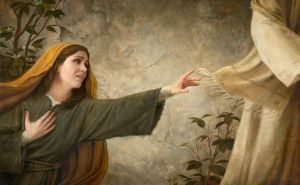 Today’s Gospel seems to be just another healing miracles of Jesus, but if we read it closely, the story of the healing of the woman with hemorrhage is extraordinary tale of faith. We are not sure what kind of hemorrhage she suffers, but the fact that she bears the sickness for 12 years, spends a lot for the medication, and does not get any better, means it is pretty serious, if not terminal. During this time, the physicians are extremely rare, and expectedly, the patients need to spend a lot of money. The woman may come from a wealthy family, but she is impoverished because her prolong sickness. The woman is losing her life and facing despair. I am currently assigned as an associate chaplain in one of the hospitals in Metro Manila, and my duty is to make pastoral visit to these patients. I encounter some patients who are suffering from certain health conditions that drain all their resources, and it seems the situation does not get any better. I realize the story of the woman with hemorrhage is not only her story happened in the far past, but it is also our stories here and now.
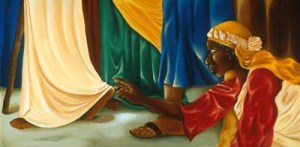 Injil hari ini tampaknya tidak berbeda dengan kisah-kisah mukjizat penyembuhan Yesus, tetapi jika kita membaca dengan seksama, kisah penyembuhan perempuan dengan pendarahan ini sebenarnya luar biasa. Kita tidak tahu dengan pasti pendarahan apa yang dideritanya, tetapi fakta bahwa ia menderita kondisi ini selama 12 tahun, menghabiskan banyak untuk pengobatan dan kondisinya semakin memburuk, ini berarti sangat serius. Pada zaman itu, tabib sangat jarang, dan berobat perlu mengeluarkan banyak uang. Perempuan ini mungkin berasal dari keluarga kaya, tetapi dia jatuh miskin karena kondisinya tersebut. Perempuan ini mulai kehilangan hidupnya dan menghadapi keputusasaan. Saya saat ini ditugaskan sebagai asisten imam di salah satu rumah sakit di Metro Manila, dan tugas saya adalah melakukan kunjungan pastoral ke pasien-pasien yang dirawat di rumah sakit tersebut. Tidak jarang saya menjumpai pasien yang menderita kondisi kesehatan yang menguras semua sumber daya mereka, dan tampaknya situasi mereka tidak menjadi lebih baik. Saya menyadari kisah perempuan dengan pendarahan ini bukan hanya kisahnya yang terjadi di masa lalu, tetapi juga kisah umat manusia di zaman ini.
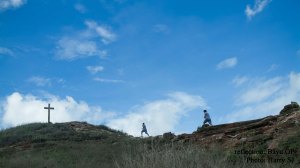 If Jesus is a carpenter, why does He speak about the vine in today’s Gospel? Does He have the competency to draw wisdom from a field that is not His expertise? We recall that Jesus grows and lives in Galilee, and in this northern region of Israel, the land is relatively fertile and agricultural industry is thriving. Some archeological findings suggest that in Nazareth, despite being a small village, the community members are engaged in small time farming, grapes press, and winemaking. A young Jesus must have been involved with this farming activities and perhaps even helped in a nearby vineyard. Thus, Jesus does not hesitate to teach wisdom using the imageries coming from the agricultural settings, like parables related to the vineyard (Mat 20:1-16), planting seeds (Mat 13:1-9), wheat and weed (Mat 13:24-30), and harvest (Mat 9:35).
 Jika Yesus adalah seorang tukang kayu, mengapa Ia berbicara tentang pokok anggur? Apakah Dia memiliki kompetensi untuk mengajar dari bidang yang bukan keahlian-Nya? Kita ingat bahwa Yesus tumbuh dan hidup di Galilea, dan di wilayah utara Israel ini, tanahnya relatif subur dan industri agrikultur cukup berkembang. Beberapa temuan arkeologi menunjukkan bahwa di Nazaret, meskipun adalah desa kecil, penduduknya terlibat dalam pertanian skala kecil, dan juga pembuatan anggur. Sebagai penduduk Nazaret, Yesus muda sedikit banyak terlibat dengan kegiatan pertanian ini, dan mungkin pernah membantu di kebun anggur terdekat. Karena pengalaman hidup ini, Yesus tidak ragu untuk mengajarkan kebijaksanaan menggunakan citra-citra yang berasal dari dunia agrikultur, seperti perumpamaan yang berhubungan dengan kebun anggur (Mat 20: 1-16), menanam benih (Mat 13: 1-9), gandum dan lalang (Mat 13: 24-30), dan panenan (Mat 9:35).
