Reflection on the 33rd Sunday in Ordinary Time [November 18, 2018] Mark 13:24-32
…they will see ‘the Son of Man coming in the clouds’ with great power and glory… (Mk. 13:26)

The last book of the Bible is called the Book of Apocalypse. The Greek word “ apokalopsis ” means unveiling or revelation. Thus, the 27th book of the New Testament is also known as the Book of Revelation. It is recognized as an “apocalypse” literature because the book unveils the future events, and usually, these are dramatic happenings at the end of the world. Our Gospel this Sunday is taken from Mark chapter 13, and this chapter is also known as the little “Apocalypse.”
Mark 13 speaks about the coming of the Son of Man. But, reading closely, we discover some distressing and even horrifying events that precede this glorious coming. The Temple of Jerusalem will be demolished, Jesus’ followers will endure severe persecution, and the sun, the moon, and other celestial bodies begin crumbling. This generation will be a terrible time to live.
For modern readers like us, our Gospel today does not sound optimistic at all. In fact, we may question whether it is a Good News of salvation or a nightmarish story that scares little children? For many of us who attend the Sunday mass faithfully, we listen to this little apocalypse at the end of every Church’s liturgical year. Thus, as we have heard it year after year, the story has lost its teeth, and we no longer pay attention to its details. After all, we are still alive and kicking.
However, the apocalypse literature has a different impact and meaning for the first Christians, the original readers of the Gospel of Mark. For the early Church, the apocalypse does not mean to be a horror story, but rather a message of hope. The early Christians were a tiny minority in the vast Roman empire. Because they were firm in their conviction to worship one God, and refuse to worship Caesars and the Roman gods, they were continually subjects of harassment, persecution and even martyrdom. One of the most brutal persecutions of Christians was under the order of Emperor Nero. He blamed Christians for the fire that consumed parts of the City of Rome. He ordered Christians to be arrested and tortured. Some were fed to the wild beasts. Some were eaten by the hungry dogs. Others were burned at stick to light up the City at night. In this time of desperation, Mark chapter 13 gave them the Gospel of hope. No matter what happened to Christians, whether it is discrimination, persecution, disaster, or even the end of the world, we are assured that it is God who is in control; He has the final word.
The mere fact we can read this reflection means that we are living in a much better time compared to the persecuted Christians. However, the message of the apocalyptic literature remains true to us and all Jesus’ followers through the ages. Facing daily challenges and toils, unexpected and unfortunate events, and various problems and complexities, we tend to shrink to ourselves, to be frustrated, and lose hope. More and more young people easily get depressed, and some, unfortunately, decide to end their lives. This happens, I believe, because we no longer know how to hope. In his book, Crossing the Threshold of Hope, St. John Paul II was asked whether the holy pope ever doubted his relationship with God, especially in these periods of trouble and difficulty. As a man of hope, his answer was simple yet powerful, “Be not afraid!” The Church should be the school that teaches her children to dare to hope, even hope against all hope, because in the end, God has the final word, and we should not be afraid.
Br. Valentinus Bayuhadi Ruseno, OP
 Several years ago, I gave a talk on the introduction to Christology to a group of young Filipino professionals who wished to deepen their spirituality. The first question I asked them as we commenced the short course was, “Who do you say that Jesus is?” The answers were varied. Some gave a dogmatic formula like Jesus is God, one quoted the Bible saying Jesus is the Word made flesh, one expressed boldly that Jesus is Savior and Lord, and the rest shared personal convictions like Jesus is their closest friend, or Jesus is their Shepherd. All these answers were right, but nobody claimed that Jesus is the Christ. Considering that our subject was Christology, we missed the basic Jesus’ title, in Greek, “Christos,” in Hebrew, “Messiah,” and translated into English, the Anointed One. Fortunately, around two thousand years ago, Simon Peter was able to spell the title when Jesus Himself asked the question.
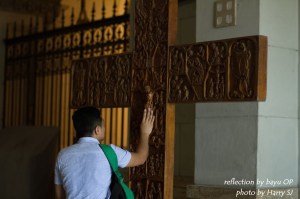 Beberapa tahun yang lalu, saya memberikan ceramah pengantar Kristologi bagi sekelompok profesional muda Filipina yang ingin memperdalam spiritualitas mereka. Pertanyaan pertama yang saya tanyakan kepada mereka adalah, “Menurut kamu, siapakah Yesus itu?” Jawabannya beragam. Beberapa memberikan formula dogmatis seperti Yesus adalah Allah, ada yang mengutip Alkitab dan mengatakan Yesus adalah Firman yang menjadi daging, seseorang menyatakan dengan berani bahwa Yesus adalah Juruselamat dan Tuhan, dan sisanya berbagi keyakinan pribadi seperti Yesus adalah sahabat terdekat mereka, atau Yesus adalah Gembala mereka. Semua jawaban ini benar, tetapi tidak ada yang mengklaim bahwa Yesus adalah Kristus. Mempertimbangkan bahwa ceramah kami adalah Kristologi, kami sepertinya lupa akan identitas dasar Yesus, dalam bahasa Yunani, “Christos,” dalam bahasa Ibrani, “Mesias,” yang berarti “Yang Diurapi”. Untungnya, sekitar dua ribu tahun yang lalu, Simon Petrus mampu mengucapkan identitas dasar ini ketika Yesus Sendiri menanyakan pertanyaan ini.
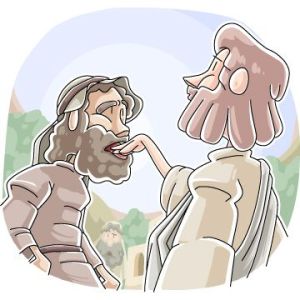 The deaf man whom Jesus heals is so blessed. He is able to see Jesus, and He finds healing. Inspired by this miracle, we wish that we will also meet Jesus and He will heal our sickness and solve our problems. Thus, we come to various places where we believe Jesus will heal us. We visit pilgrimage sites, we attend prayer and worship meetings, we recite various novenas, and we become actively involved in the Church’s organizations. We believe that our faith in Jesus will save us. However, what if our prayers are not granted? What if our problems are not solved but rather grow in number? What if our sickness is not healed, but gets worse? What if we do not feel that we are saved? One time, I visited Flora [not her real name], a colon-cancer patient, and she asked me, “Brother, I have faith in God, and I faithfully serve the Church, but why am I suffering from this terrible sickness?” Surely, it was a tough question.
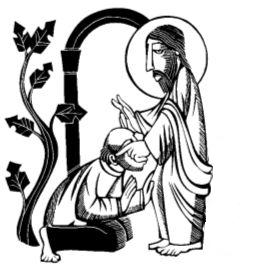 Minggu ini kita mendengar tentang Yesus yang menyembuhkan seorang tuli dan bisu. Terinspirasi oleh mukjizat ini, kita berharap bahwa Yesus akan menyembuhkan penyakit kita dan memecahkan segala masalah kita. Jadi, kita pergi ke berbagai tempat ataupun kegiatan di mana kita percaya Yesus akan menyembuhkan kita. Kita pergi ke situs ziarah, kita menghadiri pertemuan doa, dan kita menjadi aktif terlibat di Gereja. Kita percaya bahwa iman kita kepada Yesus akan menyelamatkan kita. Namun, bagaimana jika doa kita tidak dikabulkan? Bagaimana jika masalah kita tidak selesai tetapi bertambah jumlahnya? Bagaimana jika penyakit kita tidak sembuh, tetapi semakin parah? Suatu kali, saya mengunjungi Flora [bukan nama sebenarnya], pasien kanker usus besar, dan dia bertanya kepada saya, “Frater, saya memiliki iman kepada Tuhan Yesus, dan saya dengan setia melayani di Gereja, tetapi mengapa saya menderita penyakit yang mengerikan ini? “Tentunya, ini pertanyaan yang sulit dijawab.