

Minggu ke-23 dalam Waktu Biasa [C] – 8 September 2019 – Lukas 14: 25-33
 Hari ini kita mendengarkan salah satu ucapan keras Yesus. Jika kita ingin mengikuti Yesus, kita perlu membenci ayah, ibu, saudara kita, dan bahkan hidup kita sendiri; kalau tidak, kita tidak layak bagi-Nya [Luk 14:25]. Apakah Yesus serius? Yesus pasti bercanda!? TIDAK, Dia tidak bercanda dan sungguh-sungguh dengan apa yang Dia katakan. Jadi, bagaimana kita bisa memahami perkataan yang sulit ini? Yesus mengajarkan cinta kasih, belas kasihan, dan pengampunan, dan satu-satunya hal yang Ia benci adalah dosa. Apakah Yesus berubah pikiran dan sekarang berubah menjadi provokator kebencian? Jika kita bisa membenci keluarga kita, kita sekarang bisa membenci semua orang. Apakah ini yang ingin dikatakan Yesus?
Untuk menjawab pertanyaan sulit ini, kita perlu memahami juga konteks perkataan-Nya yang lebih luas. Yesus sedang melakukan perjalanan ke Yerusalem, dan Dia tahu benar apa yang menanti-Nya di kota ini: penyaliban dan kematian. Ada banyak orang yang mengikuti Yesus karena Yesus adalah public figure yang sangat populer. Banyak yang ingin disembuhkan, yang lain ingin melihat mukjizat Yesus, dan sisanya hanya ingin mendengarkan ajaran-Nya yang penuh kuasa. Ini adalah mentalitas kerumunan: mengikuti sesuatu atau seseorang karena kepentingan egois kita. Ini bukan murid-murid sejati. Ini adalah hiburan.
Yesus memahami hal ini dengan baik, dan Dia perlu menegur mereka bahwa mengikuti-Nya bukanlah hiburan. Dia membuat mereka memutuskan apakah akan tetap sebagai kerumunan atau menjadi murid, untuk pergi atau berjalan di jalan salib-Nya. Namun, keputusan semacam ini hanya mungkin terjadi ketika kita tidak terikat pada hal-hal dan orang yang kita sayangi. Kita tidak dapat memikul salib kita kecuali kita siap untuk menyerahkan hidup kita.
Pertanyaannya tetap, apakah Yesus mempromosikan kebencian? Salah satu gaya favorit Yesus dalam berkhotbah adalah hiperbola, atau melebih-lebihkan untuk menekankan suatu hal. Sebagai contoh, Yesus pernah berkata, “jika matamu menyesatkan engkau, cungkillah dan buanglah itu, karena lebih baik bagimu masuk ke dalam hidup dengan bermata satu dari pada dicampakkan ke dalam api neraka dengan bermata dua. [Mat. 18: 9] ” Tentu saja, Yesus tidak secara harfiah menuntut kita untuk mencabut mata kita, tetapi Dia dengan kuat menggarisbawahi konsekuensi menyedihkan dari dosa. Jadi, ketika Yesus berbicara bahwa kita perlu “membenci” orang tua kita dan hidup kita, Yesus tidak bermaksud untuk mempromosikan kebencian dan kekerasan. Yesus dengan kuat mengingatkan orang-orang bahwa kecuali mereka mencintai Yesus di atas segalanya, kita tidak layak menjadi pengikut-Nya.
Ini memiliki implikasi yang luar biasa dalam kehidupan kita. Ya, kita perlu mencintai keluarga kita, tetapi kita harus mengasihi Yesus terlebih dahulu, atau kita harus mengasihi orang tua kita di dalam Yesus. Adalah wajar untuk berpegang teguh pada kehidupan, tetapi kehidupan ini hanya memiliki makna yang sebenarnya ketika ditawarkan kepada Yesus. Dalam pernikahan, pasangan harus saling mencintai, tetapi kecuali mereka mencintai Yesus terlebih dahulu, pernikahan itu hanya akan menjadi kontrak sosial. Adalah tugas suami untuk memimpin istrinya untuk mengasihi Yesus dan istri untuk mengikuti Yesus bersama suaminya. Adalah juga tugas utama orang tua untuk mengajar anak-anak mereka untuk mengasihi Allah dan Hukum-Nya.
Yesus pasti mencintai ibu-Nya, Maria dan menghormati ayah angkatnya, Yusuf, tetapi jelas bagi Yesus bahwa kasih-Nya bagi mereka berakar dan diarahkan kepada Bapa-Nya di surga. Adalah murid yang sejati yang mau membenci hidup kita dan segala hal lainnya demi Yesus.
Valentinus Bayuhadi Ruseno, OP
 Humility is actually being simple and doing simple, yet it is so simple that many of us find it difficult to be and do. It seems paradoxical but it is the reality that we experience in our day to day life. It is because we are living in the world that is so proud with itself and it continuously influences us to become proud as well. We can practically be proud of anything. We can be proud of our personality, family and clan, personal achievements, successful careers and status in life. We can be proud of the good things we have done or even the bad things we have committed. Eventually, the awful irony in our life is when we are even proud of our humility.
 Kerendahan hati sebenarnya adalah melakukan hal yang sederhana dan menjadi orang yang sederhana, tetapi karena hal ini sangat sederhana, banyak dari kita merasa sulit untuk melakukannya. Inilah adalah paradoks yang kita alami dalam kehidupan kita sehari-hari. Hal ini dikarenakan kita hidup di dunia yang begitu sombong dengan dirinya sendiri, dengan segala kemajuan, kejayaan, kekayaan, dan dunia ini terus memengaruhi kita untuk menjadi angkuh. Kita bisa jadi sombong karena banyak hal. Kita bisa sombong karena kepribadian, keluarga dan klan kita, prestasi pribadi, karier dan status yang sukses dalam hidup. Kita bisa menyombongkan hal-hal baik yang telah kita lakukan atau bahkan hal-hal buruk yang telah kita lakukan. Akhirnya, ironi mengerikan dalam hidup kita adalah ketika kita bahkan menyombongkan kerendahan hati kita.
 Salvation is one of the burning topics of discussion in Christian circles. In several discussions I facilitated, I often encountered some participants asked: Who will be saved? By what means are we going to be saved? When will be saved? Do we need to believe in Jesus to be saved? The answers can be as simple as yes or no, but often, the audience with critical minds demand more comprehensive and sensible answers. Yet, I always bring the listeners to see salvation from a different and deeper angle.
 Keselamatan adalah salah satu topik diskusi yang membakar. Dalam beberapa diskusi yang saya fasilitasi, saya sering menemui beberapa peserta yang bertanya: Siapa yang akan diselamatkan? Dengan cara apa kita akan diselamatkan? Kapan akan diselamatkan? Apakah kita perlu percaya kepada Yesus untuk diselamatkan? Jawabannya bisa sesederhana ya atau tidak, tetapi seringkali, peserta dengan pikiran kritis menuntut jawaban yang lebih komprehensif dan masuk akal. Namun, saya selalu membawa pendengar untuk melihat keselamatan dari sudut yang berbeda dan lebih dalam.
 In ancient Israel, the masters of the house were often leaving their homes for business trips or attending social gatherings like weddings. They would entrust their houses and their possessions to chief servants. And this was the world without a cellular phone, internet, and GPS. Thus, the servants have no idea of the ETA (estimated time of arrival) of their masters. It could be 8 PM, midnight or even early in the morning. The best attitude of a servant in this scenario is to be always vigilant and prepared for the arrival of his master.
 Di Israel kuno, tuan rumah sering meninggalkan rumah mereka untuk perjalanan bisnis atau menghadiri pertemuan sosial seperti pernikahan. Mereka akan mempercayakan rumah dan harta benda mereka kepada seorang hamba yang adalah hamba utama. Dan kita perlu ingat bahwa ini adalah dunia tanpa telepon seluler, internet dan GPS. Dengan demikian, para pelayan tidak tahu dengan pasti waktu kedatangan dari tuan mereka. Bisa jadi jam 8 malam, tengah malam atau bahkan dini hari. Sikap terbaik seorang pelayan dalam skenario ini adalah untuk selalu waspada dan siap menghadapi kedatangan tuannya.
 We were all born without bringing anything with us, and for sure, when we die, we will bring nothing with us. Job once said, “Naked I came forth from my mother’s womb, and naked shall I go back there. The LORD gave, and the LORD has taken away; blessed be the name of the LORD!” (Job 1:21). However, as we grow up and old, we begin to acquire things and possessions. Some are given, but some we earn it. As we are accumulating, we start attaching ourselves to these material belongings. Some of us are obsessed with collecting bags, shoes, and clothes, some others with more expensive things like electronic devices and cars. We believe these are ours, and we can own them until the Kingdom comes.
 Kita semua dilahirkan tanpa membawa apa-apa, dan sama ketika kita mati, kita tidak akan membawa apa pun. Ayub pernah berkata, “Dengan telanjang aku keluar dari kandungan ibuku, dengan telanjang juga aku akan kembali ke dalamnya. TUHAN yang memberi, TUHAN yang mengambil, terpujilah nama TUHAN!” (Ayub 1:21). Namun, seiring bertambahnya usia, kita mulai memperoleh banyak hal dan harta benda. Ketika kita mulai mengakumulasi, kita mulai terikat pada barang-barang materi ini. Beberapa dari kita terobsesi dalam mengumpulkan tas, sepatu, dan baju, beberapa lainnya dengan barang-barang yang lebih mahal seperti perangkat elektronik, mobil dan bahkan mobil. Kita mulai percaya ini adalah milik kita, dan kita dapat memilikinya bahkan sampai kita masuk surga.
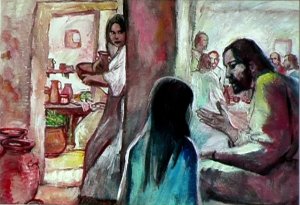 Melakukan sesuatu untuk melayani Tuhan tentu baik dan terpuji. Dan karya-karya ini sangat banyak dan beragam. Tindakan-tindakan ini dapat secara langsung melayani Dia di Gereja, terutama dalam liturgi. Kita dapat berpartisipasi dalam ibadat sebagai anggota paduan suara, lektor, putra altar, asisten imam, atau bahkan sebagai imam yang mempersembahkan Ekaristi itu sendiri. Namun, kita juga dapat melayani Dia melalui sesama ketika kita terlibat dalam inisiatif amal untuk membantu orang miskin, untuk memperjuangkan keadilan dan perdamaian dan integritas ciptaan. Kita memiliki banyak cara, tetapi tujuannya adalah satu dan itu adalah untuk memuliakan Dia.
